
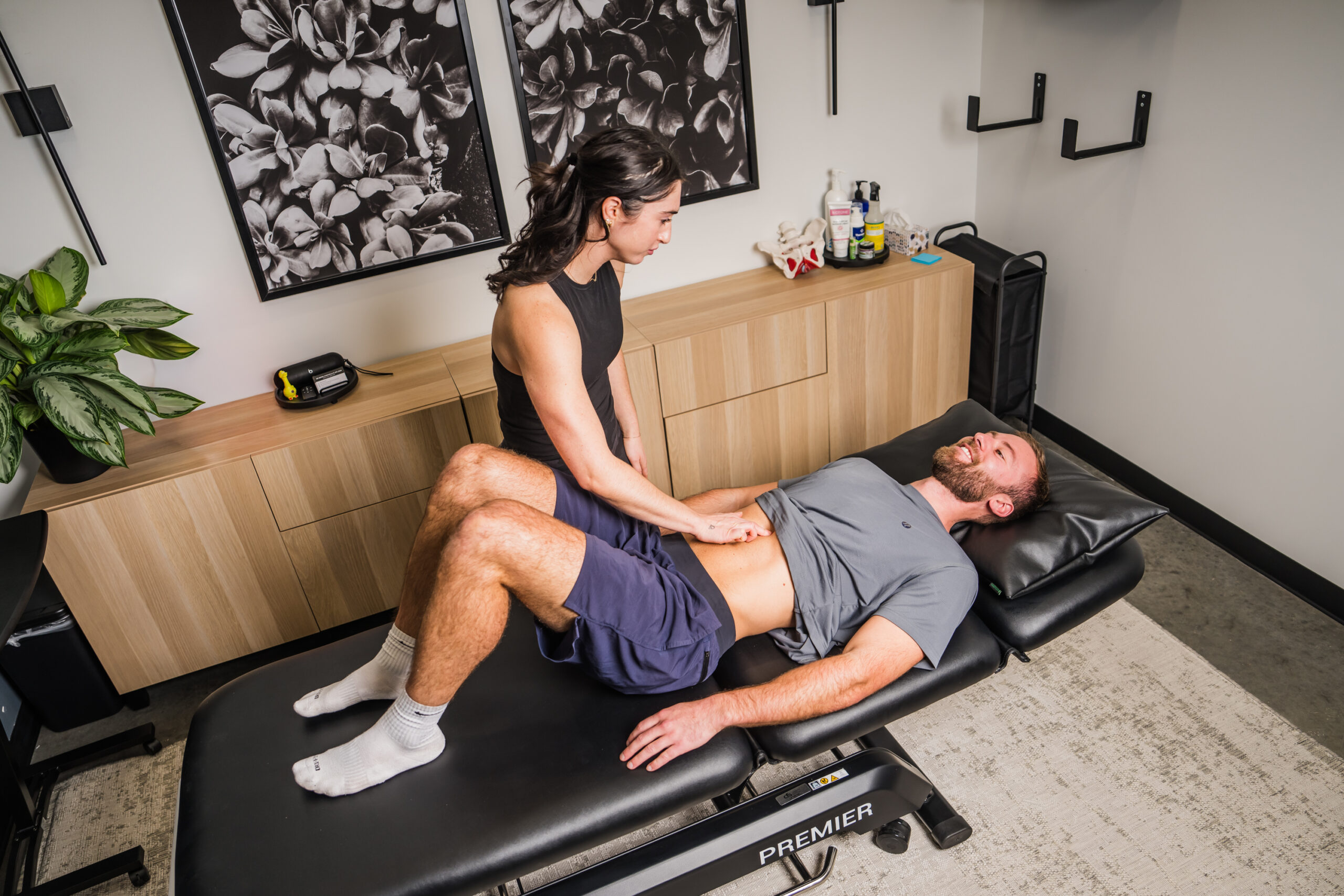
Pelvic floor care can feel unfamiliar, and it’s normal to have questions before your first visit. Here you’ll find answers about what to expect during treatment, who can benefit, and how our private, one-on-one approach is designed to help you feel comfortable and supported from day one.
Whether you’re navigating postpartum recovery, managing pain or leaking, or simply want to understand how pelvic floor therapy fits into your overall health, we’re here to help you take the next step with confidence.
Your pelvic floor is a group of muscles that stretches from your pubic bone to your tailbone. These muscles support your pelvic organs, help control your bladder and bowel, contribute to sexual function, and play a direct role in core stability during movement and heavy lifting. They also share connections with your lumbar spine and hips, making them an often overlooked piece in lower back pain and hip dysfunction.
The pelvic floor is active in daily activities you may not think about, from going to the bathroom to picking up your child, coughing, laughing, and sneezing. When these muscles are too tight, too weak, or not coordinating properly, the result is pelvic floor dysfunction. That can show up as urinary incontinence, pelvic pain, pain during sex, difficulty exercising, or a feeling that something “just isn’t right” in your core.
Pelvic floor physical therapy is a specialized form of treatment that focuses on restoring strength, coordination, and muscle tone to this area. A doctor of physical therapy with advanced training in pelvic health evaluates how your pelvic floor is functioning, identifies the root cause of your symptoms, and builds a treatment plan around your specific needs and goals.
This is not a one-size-fits-all approach, and it goes well beyond basic pelvic floor exercises like Kegels. At Performance Shift, your pelvic floor therapist in Denver works with you one-on-one to address the full picture, whether that involves manual therapy, dry needling, cupping, neuromuscular re-education, breathing work, or progressive loading for return to sport.
No, and that is a common misconception. Everyone has a pelvis, which means everyone can benefit from improved pelvic floor strength, control, and function. Men experience pelvic floor dysfunction too, including post-surgical incontinence, chronic pelvic pain, and tension that limits athletic performance. We work with males, females, and adolescents, and our team has specific training across all populations.
Yes. Pain during sex is one of the most common reasons patients seek pelvic floor physical therapy. This pain is often caused by pelvic floor muscles that are too tight, have increased muscle tone, or are not coordinating correctly. Conditions like vaginismus, vulvodynia, and dyspareunia all respond well to specialized pelvic floor treatment. Your therapist works with you to identify the source of pain and build a plan to restore comfortable, pain-free sexual function.
No. Colorado is a direct access state, so you can book your evaluation at Performance Shift without a physician referral. Most patients schedule directly through our website or by calling the clinic.
The right pelvic floor physical therapist should hold a Doctor of Physical Therapy degree with advanced training specifically in pelvic health, not just a weekend certification. You want someone who provides true one-on-one sessions, treats your specific concerns (whether that is pregnancy, postpartum recovery, male pelvic health, or return to sport), and builds a treatment plan around your individual goals. At Performance Shift, every pelvic floor session is private, led by the same dedicated specialist, and backed by an integrated care model that gives you access to sports PT, performance training, chiropractic, and nutrition all under one roof.
Yes, and it is one of the most common reasons patients come to see us. Pregnancy and delivery change the pelvic floor in ways that do not always resolve on their own. We also offer prenatal pelvic floor therapy for patients who want to prepare their body before delivery. Whether you are weeks or years postpartum, treatment can make a real difference.
It can, but it is never required. An internal assessment gives your therapist the most detailed picture of how your pelvic floor muscles are functioning, but we always explain what is involved and only proceed with your full consent. Many patients are surprised by how comfortable and clinical the process is, and we can accomplish a great deal through external evaluation if that is your preference.
Most patients begin noticing meaningful changes within 4 to 6 weeks of consistent treatment. A typical course of care at Performance Shift runs 4 to 12 sessions depending on the complexity of the pelvic floor dysfunction being addressed. Some patients see improvement after just a few visits, while more complex cases may take longer. Your therapist will set clear expectations during your first session and adjust your treatment plan as you progress.
Performance Shift is an out-of-network, cash-based practice, which means you pay directly for your sessions and receive a superbill you can submit to your insurance for potential reimbursement. This model allows us to provide longer, one-on-one sessions with a specialist rather than shorter visits split between multiple patients. We accept HSA and FSA accounts, and our team can help you understand your out-of-network benefits before you start. Contact us for current session rates and package options.
The Performance Shift is located at 6403 S Uvalda St Suite 300, Centennial, CO 80111. Our pelvic floor physical therapy clinic serves women, men, adolescents, and athletes across the south Denver metro area, including Centennial, Denver, Highlands Ranch, Lone Tree, Greenwood Village, Castle Pines, Castle Rock, Aurora, Littleton, Parker, and Englewood.